How Hail Shield Performs in Real Storm Conditions — What You Can Actually Expect
Setting Realistic Expectations
There's a lot of marketing language in the vehicle protection space — bold claims, dramatic imagery, superlatives that describe products performing perfectly under ideal conditions while glossing over the realities of how those products actually work when conditions aren't ideal.
This blog takes a different approach. Rather than describing Hail Shield in the best possible light under the best possible conditions, it describes honestly what Hail Shield was designed to do, how it performs under real storm conditions, and what a driver should realistically expect when they deploy it against an actual hailstorm.
The honest answer is a good one. But it's worth arriving at it honestly rather than through marketing gloss — because drivers who understand what Hail Shield actually delivers will trust it more, use it more effectively, and get more out of it than drivers who have unrealistic expectations in either direction.
What Hail Shield Is Designed to Do
Hail Shield was designed to dramatically reduce and in most cases eliminate hail damage to covered vehicle surfaces during real storm events.
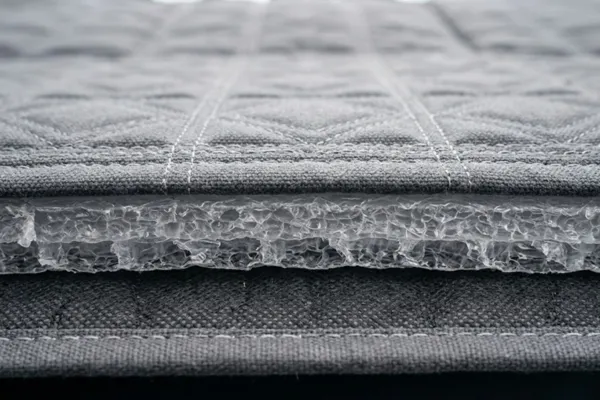
The specific mechanism is the quilted grid system — which distributes impact force across the cover's surface rather than concentrating it at the point of contact. Combined with military-grade outer shell materials, this system is designed to manage the impact physics of hailstones ranging from small nuisance stones up through the larger, high-velocity stones that cause the most significant vehicle damage.
The design goal is not to make the cover indestructible. It's to ensure that the force reaching your vehicle's panels — transmitted through the cover after the quilted grid has distributed it — falls below the threshold required to cause permanent deformation. That threshold is the standard Hail Shield is engineered to meet.
Performance Against Different Hail Sizes
Understanding how Hail Shield performs across the full range of hail sizes gives a realistic picture of what to expect in different storm scenarios.
Small hail — pea to marble sized (under 0.75 inches): Against small hailstones, Hail Shield provides comprehensive protection. The force delivered by small stones is well within the range that the quilted grid system manages effectively. Covered panels will emerge from these events undamaged. This size range represents the majority of hail events most drivers encounter.
Moderate hail — marble to quarter sized (0.75 to 1 inch): Against moderate hailstones, Hail Shield continues to perform at a high level. The grid system's force distribution is effective across this range, and military-grade materials provide the structural integrity to maintain protection through repeated moderate impacts across a full storm event.
Large hail — quarter to golf ball sized (1 to 1.75 inches): Against large hailstones — the range that produces significant, expensive vehicle damage — Hail Shield's protection is at its most important and its most impressive. The quilted grid system was specifically engineered to address this size range, where concentrated impact force is most likely to cause denting on unprotected panels. Protection is not absolute at every impact point for the largest stones in this range, but coverage is substantially better than any standard cover alternative.
Severe hail — golf ball sized and above (over 1.75 inches): Against severe hailstones, Hail Shield provides meaningful protection relative to no protection — the quilted grid continues to distribute force and military-grade materials continue to absorb impact energy. However, the most extreme hail events — baseball-sized stones or larger — can exceed the protection threshold at direct impact points. In these rare but extreme scenarios, Hail Shield substantially reduces damage rather than eliminating it entirely.
The Wind Factor
Hail rarely falls straight down. In severe storms, significant wind accompanies hail — driving stones at angles that create different impact geometries and different force vectors than vertical impact.
The buckle and strap securing system was specifically designed for wind-accompanied storm conditions. It holds Hail Shield firmly in place across the vehicle's profile even when wind is actively working to shift or lift the cover. Consistent positioning throughout the storm is critical for consistent protection — a cover that shifts during the storm creates exposed areas that receive unprotected impact.
Wind-driven hail also creates different impact angles — stones striking at oblique angles rather than straight down. The quilted grid system's force distribution capability functions across these different impact geometries, distributing oblique impact force through the grid network the same way it distributes vertical impact.
The Securing System Under Storm Conditions
One of the most important performance factors in real storm conditions is whether the cover stays where it's deployed. A cover that partially lifts, shifts across the vehicle, or comes loose on one side provides inconsistent protection that can leave critical panels exposed.
The buckle and strap system was tested against the wind conditions that real hailstorms produce. In the real storm scenario — wind accompanying serious hail, gusts creating variable load across the cover's surface — the securing system maintains consistent positioning.
This is not a trivial engineering achievement. The wind load on a large vehicle cover during a serious storm is significant. The securing points need to accommodate the vehicle's profile, maintain consistent tension against variable wind load, and hold their fastening without requiring ongoing adjustment during the storm.
Drivers who follow the deployment protocol — ensuring the buckle and strap system is fully engaged before the storm arrives — should experience consistent coverage throughout the storm event.
Post-Storm Assessment
After a storm event, the appropriate protocol is to remove Hail Shield, inspect the cover, and assess the vehicle.
In the typical hail event, the cover will show evidence of hail impacts — surface marks or impressions on the outer shell that indicate where hailstones struck. These marks are the cover doing its job — absorbing and distributing impact rather than transmitting it to the vehicle beneath. The presence of impact marks on the cover is not a sign of failure. It's evidence of performance.
The vehicle beneath should show no denting in areas covered by Hail Shield during the storm. Areas not covered — typically the lower sections of the vehicle that extend below the cover's footprint — may show impact from ground-bounced hail in severe events.
Military-grade materials are designed to maintain structural integrity through multiple storm events. A cover that shows surface marks from a hail event is not compromised in its protective capability for subsequent events, provided the grid structure remains intact and the securing system is undamaged.
What Honest Performance Looks Like
Hail Shield performs at a high level against the hail events that most drivers face — the moderate to large events that occur regularly in hail-prone regions and that cause the bulk of annual vehicle damage nationally.
It delivers meaningful protection across all hail sizes, with performance scaling from comprehensive protection for smaller stones to substantial damage reduction for the most extreme events. It stays in place under real storm wind conditions. It covers the surfaces that matter most. And it does all of this from a compact bag that lives in your trunk until you need it.
That's not a perfect product promise. It's an honest one. And honest performance at this level — against the hail events that cause real damage to real vehicles every storm season — is exactly what the inventor set out to deliver when he decided to build the solution the market had failed to produce.
Visit the official Hail Shield product page today. Visit Hail Shield now: https://haleshield.com/


