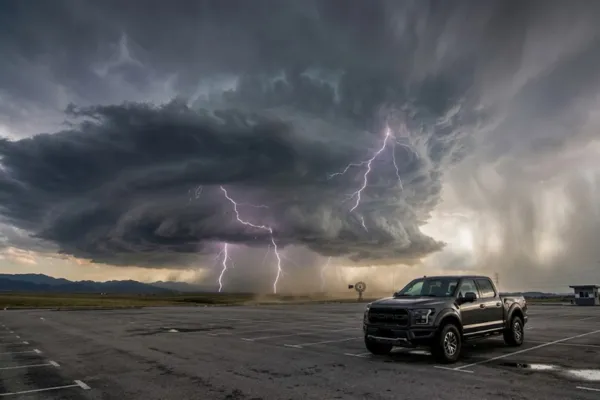
Hail Shield for Truck and SUV Owners — Big Vehicles Deserve Serious Protection
The Vehicles With the Most to Lose
When a hailstorm rolls through a parking lot, every vehicle takes damage. But trucks and SUVs — with their larger surface areas, exposed bed surfaces, panoramic roofs, and premium trim levels — often take disproportionate damage relative to smaller vehicles.
More surface area means more exposure. A full-size pickup truck has significantly more hood, roof, and body panel real estate than a compact sedan — and every square foot of that surface is a potential target during a hail event. A large SUV with a panoramic sunroof adds glass vulnerability that standard vehicles don't carry. A lifted truck with custom bodywork and premium paint carries stakes that go well beyond the standard repair calculation.
For truck and SUV owners who have invested in their vehicles — whether through a premium trim package, aftermarket upgrades, custom builds, or simply the significant dollar value that large vehicles carry — hail protection isn't a nice-to-have consideration. It's a necessity proportional to the investment being protected.
Why Truck and SUV Hail Damage Is Particularly Costly
The repair math for trucks and SUVs runs higher than the averages — and the averages are already significant.
Large vehicles have more panels. More panels means more potential damage points across a single hail event. A storm that produces moderate denting on a sedan's hood and roof may produce extensive denting across a truck's hood, roof cab, bed, tailgate, and all four door panels. The repair scope is larger, the labor hours are greater, and the total bill reflects both.
Truck beds present a specific challenge. An unprotected truck bed during a hail event can sustain significant denting across its entire floor, walls, and tailgate — surfaces that take the full force of hailstones with no body panel structure beneath to distribute impact. Repairing bed dents can be expensive and, in cases of severe damage, may require bed liner removal and replacement on top of the bodywork itself.
Premium and luxury trim levels — the high-end packages that many truck and SUV buyers choose — carry premium repair costs. Specialty paints, premium materials, and brand-specific components that aren't available through generic aftermarket channels all cost more to repair or replace. A hail event that costs $3,500 to repair on a base trim vehicle may cost significantly more on a fully loaded premium trim.
And lifted trucks with custom bodywork, aftermarket paint, and specialty components carry their own premium repair costs — ones that may not be fully reflected in standard insurance valuations and that can involve specialty shops, extended timelines, and out-of-pocket expenses beyond what standard coverage addresses.
The Panoramic Sunroof Problem
Modern SUVs increasingly feature panoramic sunroofs — large glass panels that provide an open, airy cabin experience but introduce a specific vulnerability that standard vehicles don't face.
Hail damage to glass is qualitatively different from hail damage to metal panels. A dented panel can be repaired through PDR — paintless dent repair — a relatively efficient process. A cracked or shattered sunroof panel requires replacement — a significantly more expensive repair that often involves dealership-level parts, specialized installation, and costs that can run well into the thousands for premium vehicles.
A panoramic sunroof during a serious hail event isn't just a potential dent. It's a potential replacement — and the repair cost reflects that. For SUV owners with panoramic glass, the financial stakes of an unprotected hail event are elevated beyond what the vehicle's size alone would suggest.
Hail Shield covers the entire vehicle surface — including the roof where panoramic sunroof panels are located. The quilted grid system's impact distribution capability is as relevant to protecting glass as it is to protecting metal panels — distributing the concentrated force that can crack or shatter glass across a wider area and reducing the per-point impact below the threshold for damage.
Truck Beds and the Overlooked Exposure
Here's a vulnerability that most truck owners don't think about until after it's too late: the truck bed.
A truck bed is a large, flat, completely exposed surface that faces the sky at exactly the angle most vulnerable to hail impact. It has no protective body structure beneath it to absorb or distribute force. It's often made from materials — steel, aluminum, or composite — that can sustain significant denting from even moderate hailstones.
And unlike car hoods or roofs, truck bed damage is visible in ways that affect the vehicle's daily use and long-term value in practical, immediate ways. A dented bed floor affects the usability of the bed for work and cargo. A damaged tailgate affects both function and appearance. Bed damage on a truck used for work or business creates a professional presentation issue that car owners don't face.
Hail Shield covers the entire vehicle — bed included — providing the same quilted grid protection to these uniquely exposed truck surfaces that it provides to every other panel. For truck owners who use their beds regularly and depend on their vehicle's appearance and function for work, that coverage has value beyond the repair cost.
What Hail Shield Delivers for Truck and SUV Owners
The same features that make Hail Shield effective for all vehicles are particularly valuable for trucks and SUVs — scaled to the greater surface area, higher stakes, and specific vulnerabilities these vehicles present.
The quilted grid system covers the full vehicle surface — distributing hail impact across every panel, the roof, the bed, and the glass areas that panoramic sunroofs expose. Military-grade materials provide the durability needed to protect larger, higher-value vehicles through serious storm events.
The compact storage bag is designed to travel with the vehicle — fitting in the cab, in the bed, or wherever the truck or SUV owner keeps their gear. The rapid deployment design accounts for the larger vehicle footprint — getting full coverage on a truck or large SUV efficiently within the narrow window that storm warnings provide.
The buckle and strap securing system is essential for larger vehicles, which present more surface area for wind to catch. The securing system keeps Hail Shield locked in place across the full vehicle profile even in the high-wind conditions that serious storms produce.
The Investment Worth Protecting
Trucks and SUVs represent some of the highest-value vehicles on the road. The average transaction price for a new full-size pickup truck exceeds $50,000. Fully loaded premium SUVs run significantly higher. These are substantial investments — ones that their owners maintain carefully, care about genuinely, and depend on daily.
Hail season represents a recurring threat to that investment — one that parking lot exposure makes more significant and more probable than most truck and SUV owners fully appreciate. The repair costs when a hail event hits are substantial. The downstream insurance and depreciation costs compound the immediate damage. And the sense of helplessness that comes from watching an expensive, well-maintained vehicle sustain preventable damage is genuinely frustrating.
Hail Shield changes that equation. It's the portable, military-grade protection that scales to the vehicles that need it most — covering the full surface area, protecting the specific vulnerabilities that trucks and SUVs carry, and doing it from the compact storage bag that lives wherever you keep your gear.
Your truck or SUV works hard for you. Give it the protection it deserves.
Visit the official Hail Shield product page today. Visit Hail Shield now: https://haleshield.com/


